
Your jersey full of sponsors: here’s how to make it work best
Tips & Tricks Baseball Softball Tutorials
A practical guide for youth players and parents: set up a free CoachBall Shirt Sponsor campaign in 2 minutes and fill your jersey fast.

Super Admin
A tournament trip abroad. A week-long summer training camp. New gear for a prospect camp. Chipping in to the team fund for new jerseys. For young baseball and softball players, those opportunities come up all the time—and they cost money that isn’t always available all at once.
The Shirt Sponsor tool was built to solve that in a way that fits who you are: a player with a network of family, friends, and supporters who love seeing you grow. People claim a number on the back of your jersey, and the number they pick is the amount they contribute. #12 on your jersey? €12 toward your goal. #25? €25. Their name gets added too—forever visible on the jersey they helped make possible.
In this article: how the tool works, what approach works best, and how to fill your jersey with people who support you.
Why this is a tool for individual players
The Shirt Sponsor tool works great for whole teams too, but the real power is in one player, one jersey, one story. That’s what makes this approach different.
A general club fundraiser speaks to people in a general way. A fundraiser for you—for a friend’s kid, for that niece who’s crazy about softball, for the neighbor boy who wants to go to a tournament—hits people personally. And personal always raises more than general.
That’s why this guide focuses on the individual player. At the bottom there’s a short section for coaches who want to use it for a whole team, but the default format—the one the tool is best at—is: your jersey, your sponsors.
What is the Shirt Sponsor tool?
The Shirt Sponsor tool is a free online tool that lets you set up a sponsorship campaign in two minutes. No account needed, no hidden fees, no commission.
How it works:
You create a campaign with your name, a short story about your goal, jersey colors, and a number range.
You share the link with your network.
People claim a number. Their name shows up on the jersey right away. They instantly get a personal WhatsApp message they can forward.
Every claim is also a share moment. That’s the snowball effect that makes the tool work.
Who can you realistically ask?
Before we look at number ranges, let’s map out your network. For an average youth player, the sponsor pool usually looks like this:
Immediate family (parents, grandparents, aunts and uncles): 8 to 12 people
Your parents’ friends who know you well: 4 to 8
Other parents from your team: 4 to 6
Classmates, friends, and their parents: 5 to 10
Neighbors and acquaintances who know your story: 3 to 5
Add that up and you get 25 to 40 people you can reach out to in theory. In practice, 60 to 80% of them will convert into a claim, which means 15 to 25 sponsors for an average campaign.
A 1–20 or 1–25 range fits that nicely. Got an unusually big network—a huge family, a strong online following, a tight-knit neighborhood—then you can go higher. For most players, the sweet spot is around twenty.
The math
Because the number equals the amount, you know exactly what a full campaign brings in. The sum of all numbers from 1 to N is (N × (N+1)) / 2—which in practice looks like this:
Range 1–12 (12 numbers)
Full total: €78. At 80% sold: €62.
Great for a small network, a first fundraiser, or a younger player.Range 1–15 (15 numbers)
Full total: €120. At 80% sold: €96.
Great for an average network and a short campaign.
Range 1–20 (20 numbers) — the sweet spot for most players
Full total: €210. At 80% sold: €168.
Great for an average-to-large family network and typically delivers the highest percentage of sold-out jerseys.
Range 1–25 (25 numbers)
Full total: €325. At 80% sold: €260.
Great for a big network and for organizers with experience running sponsorship fundraisers.
Range 1–26 (26 numbers) — upper limit for the average campaign
Full total: €351. At 80% sold: €281.
Great if you’re confident your network can handle it, but the added value over 1–25 is small.
> "We went from 2 to 18 sponsors in one weekend." — Organizer on the tool page
Eighteen sponsors in a weekend is exactly where most strong campaigns land, and it fits perfectly with a 1–20 range.
Get started in 3 steps
Open coachball.app/nl/tools/shirt-sponsor and click Create a campaign.
Step 1 — The basics. Your name, a short story about what the money is for, jersey color and text color. Optionally skip number 13.
Step 2 — The number range. Pick a range that fits your network. Not sure? Start with 1–20.
Step 3 — Share. You’ll get a unique link. The best way to share it—that’s where the real work is. Keep reading.
Behind the scenes, as the organizer you get an admin page. You’ll see live who claimed which number, get email updates for every new sponsor and every milestone (first claim, 25%, 50%, 75%, completion). You handle payments yourself—bank transfer, Tikkie, cash—whatever fits your network.
What works best
Prep: don’t let it come out of nowhere
A sponsorship campaign works best when it doesn’t feel like a surprise. People who’ve known for weeks what you’re working toward will claim a number faster than people hearing about your goal for the first time through the sponsor link.
Start sharing your story a few weeks before the campaign. A training photo. A quick update about the tournament you’re preparing for. A clip from your last game. Nothing pushy—just making it visible what you’re doing and why it matters to you. Then, when the sponsor link finally shows up, it doesn’t feel like a random ask—it feels like the next step in a story they already know.
For younger players, this is usually something parents do together with the child. A few Instagram stories or WhatsApp statuses spread over two weeks is enough to plant the seed.
Sharing: personal always wins
This is the single most important insight in the whole approach.
One-on-one messages via WhatsApp, iMessage, or Snapchat are by far the engine of a successful campaign. Not a group message in a family chat with twelve people at once. A real personal message, one by one, to people you know well. Like:
> "Hey Aunt Lisa, I’m going to the European Cup tournament this summer with my team—super cool, but the costs add up. I’m doing a sponsor fundraiser where you can pick a number on my jersey. Would you like to join in?"
Messages like that convert somewhere between 60 and 80%. The same kind of message in a group chat often doesn’t get above 10%—not because people don’t want to help, but because a group chat always feels like “someone else will respond.”
Snapchat works surprisingly well for younger players. Not as a general story, but through direct snaps to individual friends and people they know. For most 12–17-year-olds, it’s their main communication channel, and being asked personally on Snapchat feels very natural to peers.
Facebook and Instagram are support channels, not the main engine. A general Facebook post or an Instagram story is great for the quiet audience that already knows about your campaign—neighbors, old contacts, people you don’t talk to regularly—and for the social proof that your campaign is active. But don’t expect your biggest claims to come from there. The big numbers come from personal messages.
A good order is:
Start with your inner circle via personal messages (family, close friends, regular supporters). Goal: three to five claims on day one, including a few higher numbers, so the jersey isn’t empty when the wider round starts.
Then the wider circle via personal messages and relevant WhatsApp groups (team chat, friends chat, school parents chat).
Finally, general posts on Facebook and Instagram, once the campaign is already moving and there’s momentum.
That order ensures every new wave of visitors sees a jersey that’s already partly filled. A half-filled jersey convinces way better than an empty one.
The first 48 hours
Plan your launch for a time when people are actually on their phones. Friday evening around seven, Saturday afternoon, or Sunday morning often work well. Tuesday morning at 10:30 almost never does.
In the first two days, send your personal messages in two or three rounds. Not all ten at once—that feels like bulk to the recipients. A few in the evening, a few the next morning, a few later that day. Each message slightly tailored to the person.
Ask close family to share in their own networks what they just sponsored. An aunt texting her group “I just picked #22 for my niece—join in too” is a hundred times more effective than the same text coming from you.
The middle phase
Almost every campaign hits a dip around the halfway point. The first wave is done, momentum slows down, and the jersey is 40–60% full.
This is the moment for an update message. Not “help, it’s not working,” but “look how far we already are—ten numbers to go and the jersey is full.” A photo of the current jersey with names on it works better than text alone.
This is also a great time to personally reach out to the quiet supporters. Neighbors who don’t use WhatsApp. Grandparents who want to contribute but aren’t great with links. A quick call or visit often gets you three extra claims in five minutes.
The final push
Set a deadline up front. Two to three weeks is ideal for most campaigns—short enough to create urgency, long enough for the snowball effect to do its job.
In the last 48 hours, scarcity works. “Only three numbers left, campaign closes Sunday night” often pulls in the last claims. At this point, a general Facebook or Instagram post can also work well—the quiet audience gets one last chance and instantly knows it’s urgent.
After it ends
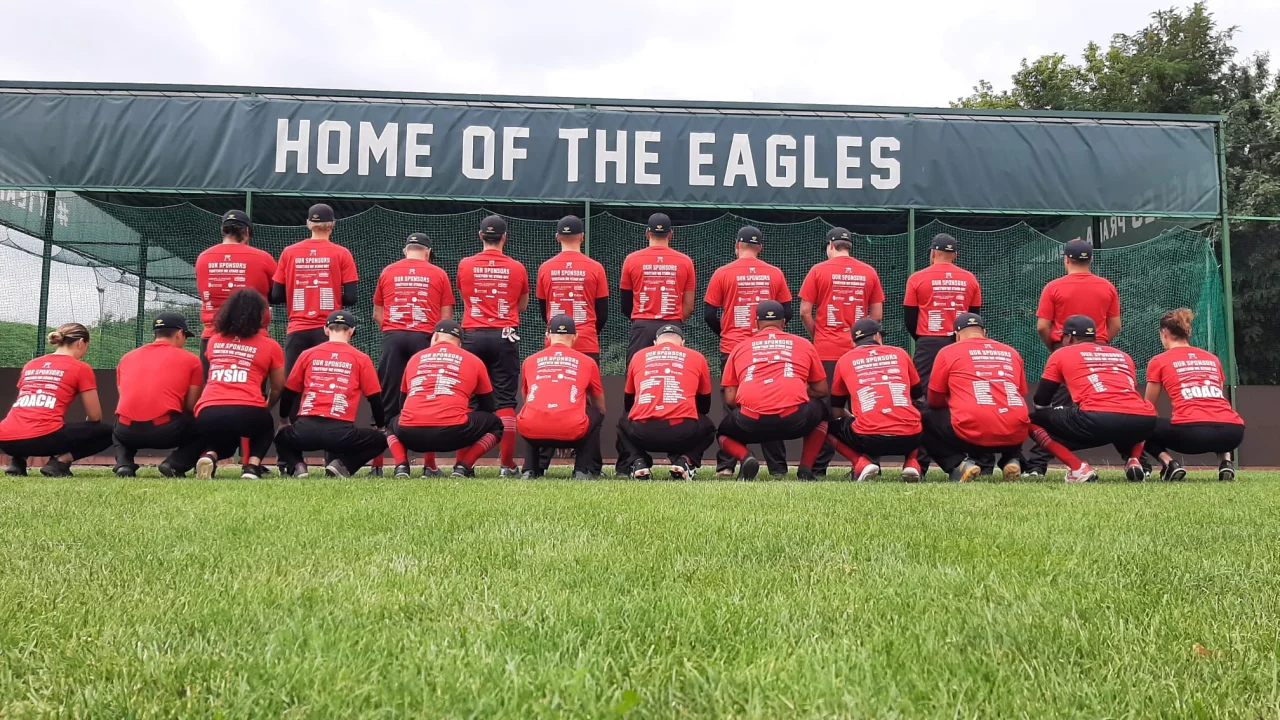
Take a photo in the real jersey with all names clearly visible. Post it in the same channels where the campaign ran. Tag people where you can. This isn’t an unnecessary thank-you—this is what closes the campaign with a shared win. Sponsors who feel appreciated will come back next year.
What if you want to do it for a whole team?
The tool works for teams too, just in a slightly different setup: each player creates their own campaign, and the team coordinates the communication around it.
For a youth team of twelve players, each with a 1–20 range, you’re looking at an expected total of €1,800 to €2,400. Combine it with an event (clinic day, open house, first league game) so all campaigns run around the same time and can boost each other’s momentum.
For clubs that want to manage multiple teams centrally, the Club Management dashboard helps you keep the overview.
But the tool really shines for the individual player. That’s where the personal connection is, where the story is, and where conversion is highest.
Ready to start?
Two minutes to set up, no account needed, completely free. No hidden costs, no commission on what you raise.
Start your jersey sponsor campaign now →
The Shirt Sponsor tool is part of CoachBall — the coaching platform for baseball and softball. Alongside this tool, you’ll also find in our tools hub the Lineup Generator, the Practice Planner and pitch count tools. All tools are free to use without an account.
 Reinier Sierag