

AI doesn't change baseball coaching — it forces us to take an honest look.
The discussion about artificial intelligence in baseball increasingly feels like a battle between hope and fear, between promise and distrust, while...
Reinier Sierag
An Opinion Piece
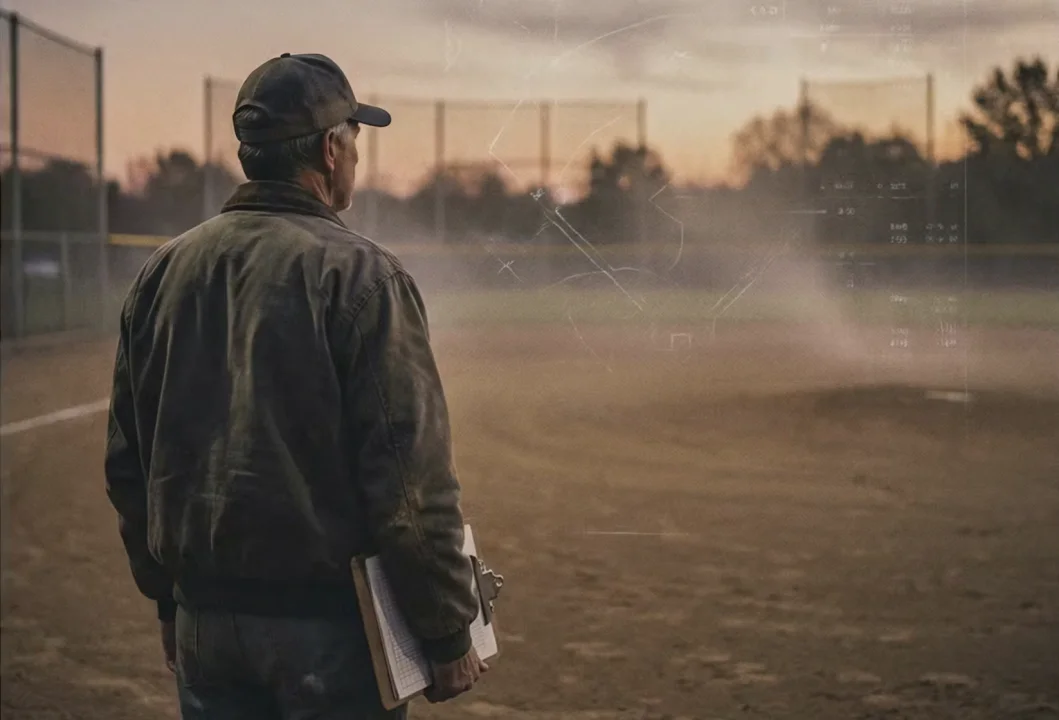
The discussion about artificial intelligence in baseball often feels like a battle between hope and fear, between promise and distrust, while the reality is much more straightforward: AI isn't stepping onto the field, isn’t in the coaching box, and isn’t making decisions during a game. Instead, it observes, measures, and remembers with a consistency that's impossible for humans, and that’s exactly what makes it both interesting and uncomfortable for coaches.
Those who read the recent article from USA Baseball closely will see no technological euphoria, but rather a sober warning wrapped in a guide: artificial intelligence is not a replacement for coaching, but a magnifying glass that mercilessly reveals what we do, how consistently we do it, and where our assumptions don’t align with reality.
That's not a futuristic tale, but a practical observation that gets to the heart of coaching, especially in a sport where development rarely follows a linear path and where context is everything.
Baseball coaches have been working with data for decades, but that data was mostly stored in the coach's head: memories of swings, a feel for timing, observations about stance and behavior, intuition built from hundreds of practices and games.AI doesn’t change the content much, but it does push for precision, as it doesn’t forget, doesn’t look selectively, and isn’t influenced by emotions or snapshots in time.
Where a coach is forced to generalize, an algorithm keeps repeating, comparing, and stacking, until patterns emerge that are simply invisible to the naked eye.
This leads to an uncomfortable truth: AI not only reveals the player but also the coach.
It makes it clear where guidance is consistent and where it isn't, where drills actually have an impact and where they just feel good, where progress is happening and where stagnation gets confused with 'a phase'.In that sense, AI is not a tool that makes the job easier, but a mirror that makes the work fairer, and that requires something from the coach who must be willing to question their own assumptions.Especially in youth coaching, that tension becomes palpable, as data is often quickly viewed as a means to compare, select, or evaluate, while the true value is exactly the opposite: making individual development visible over time, independent of others, detached from snapshots, and free from emotional highs and lows.AI can show that setbacks are normal, that growth happens in bursts, and that fatigue, growth, or changes in roles can impact performance—not to draw conclusions, but to bring calm to conversations with players, parents, and staff.
This is where the distinction lies between meaningful use and misuse of technology.Rough data without context is dangerous, and the authors at USA Baseball are remarkably clear about that: numbers only make sense when they are embedded in the circumstances in which they were generated.Was it training or a game, was the player recovering, playing a different position, experiencing physical growth or mental pressure — those aren’t just details, that is coaching.
AI can point out patterns, but only the coach can interpret the story behind them.
In that philosophy, the way CoachBall is structured makes sense—not as an authority passing judgment, but as an extension of your coaching abilities.
Data, video, and trends are brought together to allow for reflection, comparison, and review, all without creating the illusion that an algorithm knows what a player needs better than the coach who sees, talks to, and guides them weekly.Technology takes over the administrative and repetitive tasks, allowing coaches to focus on the human aspect of the game.
The fear that AI coaching makes things ‘cold’ or ‘impersonal’ completely misses the point.
The opposite is true: precisely because observations become more consistent and objective, there is room for empathy, nuance, and customization.Discussions shift from opinions to development, from comparing to understanding, and from reacting to guiding.Not because AI demands it, but because it reveals what’s really happening.
Perhaps that’s the most important takeaway: AI doesn’t change baseball by adding something new; it changes the game by removing something—noise, assumptions, and selective memory.
What remains is the craftsmanship of the coach, more sharply defined than ever.Whoever is willing to use that mirror gains time, insight, and peace.Those who don't embrace it will continue to see technology as a threat.But not because AI is too powerful, rather because it's too honest.
Source
USA Baseball Develops – A Coach’s Guide to Artificial Intelligence in Baseball
https://usabdevelops.com/page/5015/blog/24761/a-coachs-guide-to-artificial-intelligence-in-baseball
Related posts

 Reinier Sierag
Average Baseball Pitching Speeds by Age
 Super Admin
Your jersey full of sponsors: here’s how to make it work best
 Reinier Sierag